
Best Senior Living Dining Programs: 7 Signs Your Program Needs an Upgrade (Food Trends 2026)
AI Summary
By 2026, your expectations for senior living dining are evolving. Outdated menus, increasing prices, food waste, and limited flexibility can indicate the need for improvement in operations. There is a simple fix that aligns dining with the new reality and what residents want from their meals, without unnecessary complexity but with an invaluable impact on satisfaction, nutrition, operations, and dollars.
Dining is one of the most visible parts of the senior living experience. Residents notice the food, families notice the dining environment, and operators feel the impact through food costs, staffing demands, waste, and resident satisfaction.
In 2026, senior living dining is moving beyond basic meal service. Residents increasingly expect more variety, personalization, healthier choices, restaurant-style experiences, and food that reflects their preferences and lifestyles. At the same time, operators still need to control expenses and maintain efficient senior living dining services.
That creates an important question: Is your dining program keeping up?
Here are seven signs it may be time to consider whether your community offers one of the best senior living dining programs.
Related Reading: 4 Key Changes in Senior Living Food Service You Need to Know
7 Signs Your Senior Living Dining Program Needs an Upgrade
Quick Answer
What are the best senior living dining programs?
The best senior living dining programs offer nutritious meals, diverse menu choices, personalized dietary options, resident-focused hospitality, and efficient food cost management.
1. Your Menu Has Not Changed With Resident Preferences
A menu that looks the same year after year can quickly become a problem.
Senior living residents today have different expectations around food. Dining trends are predicting more flexibility, a broader range of options, international cuisines, plant-driven diets, and individualized eats. According to Senior Housing News, operators are noticing growing interest in dietary details, more diversified menu choices, vegan and gluten-free options, and bolder flavors.
That does not mean abandoning familiar favorites. Comfort foods still have an important place in senior living dining. The opportunity is to offer familiar foods alongside new choices.
Consider adding:
- Rotating seasonal menus
- Global and cultural food nights
- Plant-forward entrées
- Fresh salads and whole grains
- Lower-sodium alternatives
- Made-to-order options
- Grab-and-go choices
- Familiar comfort foods with healthier preparation methods
The goal is not to follow every food trend. It is to understand which trends make sense for your residents and budget.
Prime Source emphasizes personalized menus, resident choice, cultural and religious considerations, and flexible dining options as important components of quality senior living food service.
2. Residents Are Complaining About Food Quality or Lack of Variety
When it comes to dining programs, resident complaints are often the most obvious indicator that things need to change.
Unresolved complaints are more than just the preferences of some residents if they continually cite the same issues regarding repetitive meals, taste, choices, food portion sizes, or the visual presentation of food. It might expose larger issues with menu planning, sourcing, preparation, or communication.
In 2026, dining is increasingly viewed as part of the overall resident experience. AHCA/NCAL notes that modern senior living dining approaches emphasize individualized preferences, flexible dining times, restaurant-quality recipes, and a health-focused approach.
Start by collecting feedback consistently.
Ask residents:
- What meals do they enjoy most?
- What foods do they want to see more often?
- Are there enough choices?
- Are portions appropriate?
- Are special dietary needs being handled well?
- What would make mealtime more enjoyable?
Then use the answers to make measurable changes.
3. Your Food Costs Keep Increasing Without a Clear Explanation
Rising food prices are a reality, but unexplained increases in dietary expenses deserve closer attention.
A dining program can lose money through more than ingredient prices. Purchasing inconsistencies, poor inventory management, over-ordering, waste, inefficient preparation, and unfavorable supplier agreements can all affect the bottom line.
This is where an expense-management approach becomes important.
Prime Source’s Dietary and Nutrition solution focuses on analyzing current dietary expenses, identifying overspending and underperformance, leveraging supplier contracts, and comparing operations against industry benchmarks.
Instead of asking only, “How can we spend less?”, operators should ask:
“Where are we spending more than necessary, and what is causing it?”
That distinction matters. Cutting food quality simply to lower expenses can hurt resident satisfaction. Smarter purchasing and better operational management can help control costs without sacrificing the dining experience.
4. Food Waste Is Becoming a Routine Expense
If prepared food is regularly thrown away, expired inventory is common, or portions are consistently returned uneaten, your dining program may have an efficiency problem.
Food waste can result from inaccurate forecasting, oversized portions, poor menu popularity, excessive inventory, or preparing meals without enough consideration of actual resident demand.
Technology can help. Modern food service management systems can support inventory management, menu planning, purchasing, and operational tracking. Prime Source specifically positions food service management software as a way to reduce waste, optimize menus, and improve profitability.
A practical starting point is to track waste by category:
- Preparation waste
- Spoiled or expired inventory
- Uneaten food returned from dining rooms
- Overproduction
- Incorrect orders
Once you know where the waste occurs, you can determine what needs to change.
5. Your Dining Program Offers Little Personalization
One menu cannot always meet the needs of every resident.
Senior living communities may serve residents with different medical conditions, allergies, cultural preferences, religious requirements, swallowing difficulties, and personal food preferences. Prime Source’s nutrition guidance highlights the importance of individualized nutrition plans and specialized dietary considerations.
Personalization is also becoming a broader 2026 dining trend. Industry coverage points to personalized therapeutic diets and technology-supported menu selection as emerging areas of senior living dining.
An upgraded program should make it easier to identify and accommodate individual needs without creating unnecessary operational complexity.
That can include:
- Clear allergy and dietary information
- Therapeutic diet coordination
- Texture-modified meals
- Alternative protein options
- Hydration choices
- Cultural and religious preferences
- Reasonable menu substitutions
- Resident-specific nutrition information
Personalization should improve care while remaining practical for the kitchen team.
6. Your Dining Experience Feels More Like a Routine Than Hospitality
Good food matters, but so does the experience of dining in senior living communities.
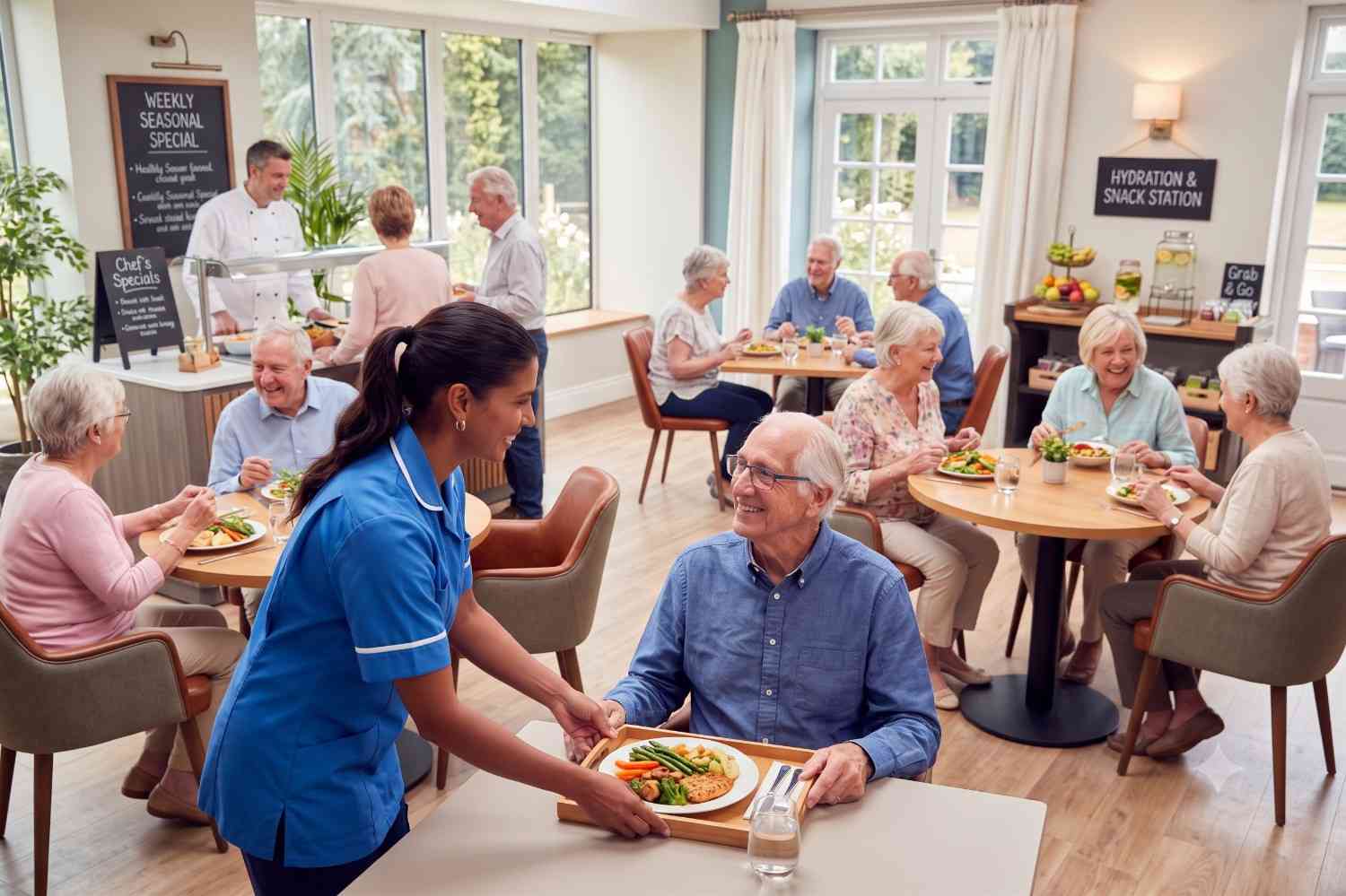
Residents are increasingly looking for dining environments that provide choice, comfort, social connection, and a sense of independence. Current senior living research highlights the move toward more flexible, restaurant-style experiences and greater resident choice.
If residents have fixed choices, limited flexibility, and little opportunity to influence the menu, your program may be falling behind.
Look for simple ways to make dining feel more welcoming:
- Theme nights
- Resident-selected meals
- Chef demonstrations
- Seasonal specials
- Casual dining options
- Flexible snack availability
- Improved presentation
- More opportunities for social dining
These changes do not always require a major capital investment. Often, better planning and resident engagement can make a meaningful difference.
7. Your Dining Team Is Working Harder Without Better Results
Perhaps the biggest warning sign is operational.
If your dietary team is constantly dealing with last-minute substitutions, inventory shortages, excessive paperwork, inconsistent ordering, staffing pressure, or unclear resident information, the program may need more than a menu refresh.
It may need better systems.
Our approach to food service focuses on the connection between purchasing, expense management, operational efficiency, and resident outcomes. Its food and nutrition solution starts with analyzing current expenses, followed by supplier access and optimization against industry benchmarks.
That approach matters because a dining upgrade should not simply add work for an already stretched team.
Instead, look for opportunities to:
- Standardize purchasing
- Improve inventory visibility
- Review supplier pricing
- Track food costs
- Analyze menu performance
- Reduce unnecessary waste
- Use technology where it improves workflow
- Benchmark expenses against comparable operations
The objective is simple: make the dining program better without making it unnecessarily more expensive or complicated.
Related Reading: Food Service Management Software
What Should a 2026 Dining Upgrade Look Like?
Quick Answer
How can senior living communities improve dining services?
Communities can improve dining services by updating menus, gathering resident feedback, accommodating dietary needs, reducing food waste, and improving inventory and purchasing processes.
The best senior living dining programs do not have to mean completely rebuilding the kitchen or replacing the entire menu.
Start with the fundamentals.
- Listen to residents. Use surveys, conversations, meal participation, and menu feedback to understand what people actually want.
- Review your numbers. Examine food costs, purchasing patterns, waste, inventory, supplier pricing, and menu performance.
- Modernize selectively. Introduce trends such as plant-forward choices, global flavors, flexible dining, and healthier options where they make sense for your resident population.
- Connect nutrition with operations. A successful dining program must support resident well-being while also protecting the facility’s financial performance.
- Measure the results. Track resident satisfaction, food costs, waste, participation, and operational efficiency after making changes.
The 2026 senior living dining environment is increasingly centered on choice, variety, wellness, personalization, and experience. At the same time, operators cannot ignore the financial side of food service. A dining program has to deliver both quality and value.
Upgrade Your Dining Program Without Losing Sight of Your Bottom Line
Quick Answer
How can senior living communities reduce dining costs without sacrificing food quality?
Communities can control dining costs through smarter purchasing, supplier contract optimization, accurate inventory management, waste reduction, and regular expense reviews.
A strong senior living dining program should do more than put meals on the table. It should support resident health, satisfaction, dignity, and quality of life while helping operators manage one of their facility’s significant ongoing expenses.
If your menu is outdated, food costs are difficult to control, waste is increasing, or residents are asking for more choices, those are signals worth investigating.
Prime Source Expense Experts helps post-acute care, long-term care, assisted living, and other healthcare facilities evaluate dietary expenses, access supplier contracts, improve purchasing decisions, and identify opportunities to improve both operations and costs.
In 2026, upgrading your dining program is not simply about following food trends. It is about building a smarter food service operation that gives residents the quality and choice they expect while giving operators better control over expenses.
Frequently Asked Questions
1. How often should a senior living community review its dining program?
Dining programs should receive continuous evaluations as opposed to only being reviewed when there is a problem. Having regular quarterly reviews can help illuminate both changing resident expectations and operational challenges, along with cost trends and opportunities for improvement before they become larger issues.
2. How can senior living communities introduce new food trends without overwhelming residents?
Add exciting new choices gradually along with classic dishes. Even small variations like rotating specials, seasonal ingredients, or international menu items that might pop up now and then allow residents to try something new while keeping reliable options they already value.
3. What role does resident participation play in improving senior living dining?
Resident participation can provide valuable insight into what works and what does not. Tasting events, dining committees, informal conversations, and voting on future specials can help residents feel more involved while giving operators practical feedback.
4. Can dining improvements increase resident engagement beyond mealtimes?
Yes. Cooking demonstrations, cultural food events, gardening programs, and themed gatherings that transform dining into a larger social and recreation opportunity can help motivate residents to socialize and engage in routine community life.
5. What should operators consider before investing in new dining technology?
Operators need to define the workflow problems they want to solve. This is when technology is supposed to make things easier, give better visibility, close support for decision-making, or reduce avoidable work instead of delivering another complicated system for staff to manage.

Michael is an accomplished leader with deep expertise in the healthcare sector. As the CEO of Prime Source, he has driven innovation and strategic growth in healthcare procurement and management. His extensive knowledge of the industry has made him a sought-after speaker, regularly lecturing at trade groups, seminars, and to industry executives on the most pressing healthcare trends and challenges. Michael is passionate about exploring the intersection of business and healthcare, providing thought leadership that shapes the future of the field.