
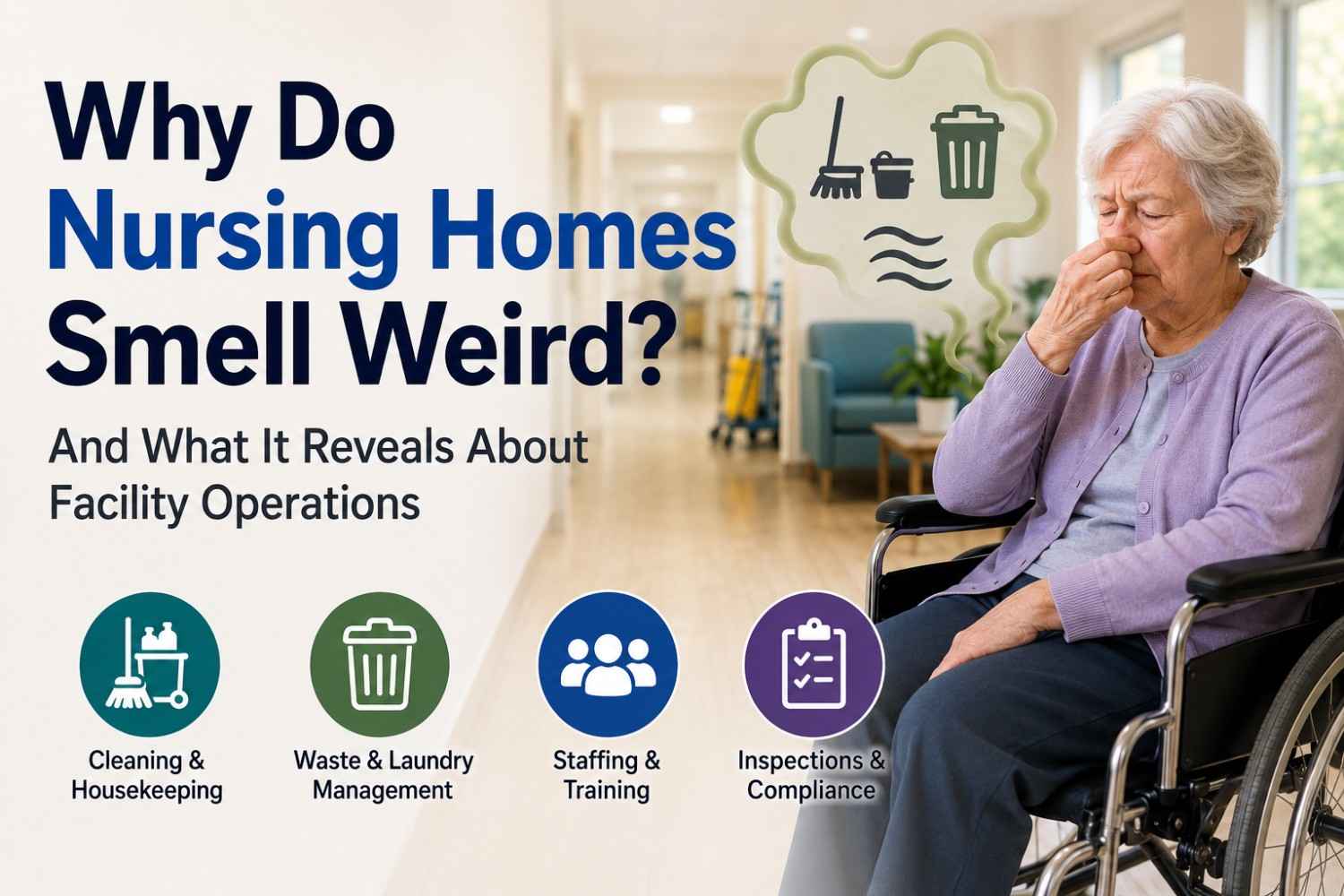
Why Do Nursing Homes Smell Weird? And What It Reveals About Facility Operations
Summary: The nursing home smell, which stakeholders usually recognise when they visit, is a critical performance indicator. Knowing why long-term care facilities have such an unoptimised environment allows the administration to recognise operational weaknesses and areas for facility improvement. You step into a healthcare facility, and the environmental quality hits you first. There is a particular odour profile coming from the place that cannot be easily explained, but it is composed of unmanaged waste and harsh cleaning chemicals, resulting in an inefficient facility presentation. Surveyors have flagged it. Residents have complained about it for decades.
The question worth asking isn’t just why nursing homes smell weird. It’s what that smell actually tells you about how a facility is run.
The question worth asking isn’t just why nursing homes smell weird. It’s what that smell actually tells you about how a facility is run.
What’s Actually Causing the Nursing Home Smell
The nursing home smell that typically exists within long-term care homes originates from several operational sources. The most prominent one relates to unmanaged incontinence-related waste products. When adult nappies, dirty linens, and surfaces affected by incontinence are not replaced optimally and effectively, odorous gases such as ammonia and hydrogen sulphide build up quickly. These are undetectable when present in small quantities but produce an unoptimised environment quickly when released into enclosed spaces.
There are additional important contributors other than incontinence-related ones:
- Insufficient cleaning protocols: Communal spaces, hallways, and residents’ rooms without adequate daily housekeeping services lead to odour-causing bacteria developing on surfaces, including flooring and upholstery.
- Inoptimised linen practices: Dirty bed linens that remain uncleaned for an extended period of time or those washed at inadequate temperatures still contain bacteria and create the possibility for facility deficiencies to form.
- Problems with drainage systems: Slow drains in bathrooms and utility rooms lead to odour-profile formation when organic material accumulates inside.
- Food waste management: Residual food waste disposed of inefficiently in residents’ rooms and galley areas will create facility presentation challenges through bacterial decomposition.
- Labour inefficiencies: Staffing ratios that are excessive are the fastest way to develop an operational compliance risk.
- HVAC deficiencies: Recycled air without proper filtration or regular duct maintenance circulates odour throughout the entire wings of a building.
Why the Nursing Home Smell Is an Operational Issue
Administrators focusing solely on the environmental presentation as a cleanliness issue neglect the bigger picture. The facility deficiencies present in the long-term care environment result from the operational gaps in staffing, logistics management, vendor oversight, and procurement.
Think about what needs to happen to correct the problem. Proper incontinence management requires sufficient access to cost-effective, high-quality briefs and underpads in proper quantity and size. Healthcare facilities that do not have an optimised supply chain for purchasing these materials will inevitably face shortages and delays in their application, thereby contributing to unoptimised environmental quality.
The housekeeping process will require a strategic supply of cleaning products at the proper dilution. Senior care facilities without structured procurement workflows for purchasing cleaning supplies often face the same problems of revenue leakage, poor quality products, or insufficient inventory control during high-demand times. Every one of these operational issues is flagged by the surveyor as a regulatory compliance deficiency and ends up being experienced by everyone.
The Supply Chain Connection Most Facilities Overlook
Here’s what doesn’t get discussed enough: odour control is a supply chain problem as much as it is a care delivery problem.
A facility that can’t maintain consistent access to quality nursing supplies, effective housekeeping chemicals, and appropriate dietary disposal products will struggle with environmental cleanliness, no matter how committed the staff is. Group Purchasing Organisations (GPOs) provide the facility with leveraged, contract pricing for exactly these types of items: nursing supplies, housekeeping supplies, and waste management solutions. This means that reliable procurement cannot be left to chance or last-minute negotiations with vendors.
Strategic procurement done systematically guarantees timely deliveries, predictable budgets, and an environment where caregivers can concentrate solely on clinical care.
What Families and Surveyors Actually See
State surveyors are trained to flag persistent odours under federal long-term care regulations. The CMS standards mandate that healthcare facilities have a safe, comfortable, and home-like atmosphere. Among the most frequently reported issues associated with environmental quality challenges in surveys of skilled nursing facilities, repeat violations could have an impact on the Five-Star Quality Rating System, thus affecting occupancy rates and revenue optimisation.
For families selecting a long-term care facility, the nursing home smell is among the most prominent cues used by them for determining the quality of care. The olfactory sense has always been associated with operational credibility and perception. Facilities with unoptimised odour profiles lose potential residents even before the visit concludes.
What a Well-Managed Facility Looks Like
| Factor | What It Looks Like in Practice |
|---|---|
| Staffing ratios | Adequate CNAs per resident to maintain incontinence care schedules |
| Supply reliability | Consistent access to right-size nursing and housekeeping products |
| Housekeeping protocol | Room and common area cleaning on documented daily schedules |
| Laundry management | Same-day processing of soiled linens; temperature-compliant washing |
| Vendor accountability | Regular review of product performance and cost against contracts |
| HVAC maintenance | Scheduled filter replacement and duct inspection |
None of these elements operates in isolation. A facility that excels in care but struggles with supply procurement will still have odour issues. A facility with strong procurement but understaffed shifts will face the same outcome.
Turn the Problem Into a Process
A solution exists for the nursing home smell in long-term care facilities. However, addressing this issue means giving it more importance than mere housekeeping. Facilities that have solved the issue take a systematic approach to handling it. They standardise their products, track their consumption, develop stable vendor relationships, and establish procurement policies that remove any supply shortages before they become a problem.
For those facilities experiencing recurring environmental quality problems, the solution involves an operational assessment that extends beyond cleaning into procurement and product standardisation.
Take the First Step Toward a Better Facility Environment
Prime Source Expense Experts works with long-term care and senior care facilities to optimise procurement across nursing supplies, housekeeping products, and waste management. A free spend analysis is the starting point for understanding where your supply costs and gaps are driving operational problems. Schedule yours today.
Frequently Asked Questions
Why does my nursing home smell bad when everything looks clean?
The issue of environmental quality control is independent of surface cleanliness. The environment could be visibly clean but have odour-producing microorganisms on furnishings, drain lines, and HVAC systems. Odour-profile management requires a regular schedule for incontinence management, optimised procurement of products, and HVAC system maintenance beyond the visual impression of cleanliness.
Is nursing home odour indicative of substandard care practices?
Odours that persist in facilities could be symptomatic of labour inefficiencies, inconsistent supply chain management, and inadequate housekeeping. All these elements contribute to the overall quality of care within the facilities. Occasional odour in any facility is normal; however, persistent odour is an indication of operational shortcomings and regulatory compliance risks.
Which cleaning products are suitable for nursing homes with odour issues?
Enzymatic cleaners, which break down the odour molecules through chemical reactions, will be more effective than the commonly used air fresheners. In consultation with strategic GPO partners and specialised suppliers of housekeeping supplies, appropriate cleaning products for all surfaces will be determined.
Can a GPO help reduce nursing home odours?
Yes. A group purchasing organisation can provide access to contracted pricing on nursing supplies, housekeeping chemicals, and waste management services, ensuring consistent product availability and cost control, both of which directly affect a facility’s ability to maintain odour control.
How do state surveyors evaluate odour in nursing facilities?
Surveyors assess odour as part of the overall environment of care requirements under federal CMS guidelines. Persistent or widespread odour can result in citations that affect a facility’s star rating and overall compliance standing.

Michael is an accomplished leader with deep expertise in the healthcare sector. As the CEO of Prime Source, he has driven innovation and strategic growth in healthcare procurement and management. His extensive knowledge of the industry has made him a sought-after speaker, regularly lecturing at trade groups, seminars, and to industry executives on the most pressing healthcare trends and challenges. Michael is passionate about exploring the intersection of business and healthcare, providing thought leadership that shapes the future of the field.